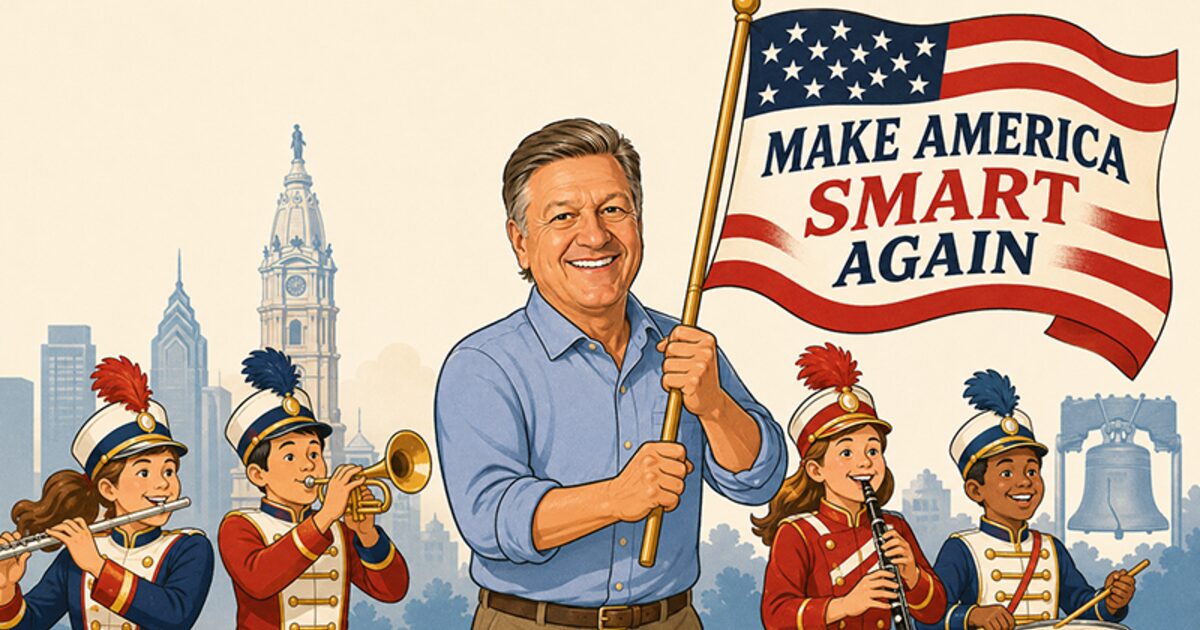
A well-known Philadelphia talk radio host is reportedly using the back-to-school season as a hook to spotlight what he calls the "dumbing down of America" — a campaign he is running through his weekly podcast and on-air platform. On its face, the story is about culture and education. But underneath, it touches a surprising number of business and corporate law issues that commentary-driven media ventures generally have to navigate. This explainer walks through those angles in plain English.
What Happened
According to a trade-press report, a longtime midday host at a Philadelphia news-talk station is encouraging fellow talk-media personalities to use the return-to-school period as an annual opportunity to discuss the state of American education and public discourse. The host — a former schoolteacher — reportedly runs a weekly podcast, now in its second year, that interviews guests on subjects such as school choice, parental rights, screen time, social media, civics, and history. The report also mentions a branded slogan tied to the campaign.
No lawsuit, regulatory action, or agency investigation is described in the source. The story is a media-industry feature, not a legal filing. But it is a useful window into the kinds of legal issues that generally arise when a broadcaster spins up a companion podcast, builds a personal brand, and takes strong public positions on institutions like schools.
Why It Matters Legally
Commentary media is a business. When a host with an established radio audience launches a podcast, several bodies of law generally come into play at once:
- Contract law, because the host typically has an employment or talent agreement with a station, and the podcast may raise questions about who owns the show, the name, and the audience.
- Intellectual property law, because show titles, catchphrases, and campaign slogans can function as trademarks and may be protectable if used in commerce.
- Defamation and media law, because critical commentary about schools, officials, companies, or named individuals can create legal exposure if statements of fact turn out to be false.
- Advertising and consumer protection law, because sponsorships, endorsements, and paid reads generally have to comply with FTC disclosure rules.
- Business litigation, which is the umbrella that often catches disputes between hosts, producers, stations, sponsors, and platforms when relationships break down.
Who Could Be Affected
Several groups of readers may find these issues relevant if a similar situation touched their own work or business:
- On-air talent and podcast hosts who want to understand what parts of their brand they personally own versus what belongs to a station or network.
- Small media companies and independent producers launching commentary shows and trying to protect a name, logo, or slogan.
- Sponsors and advertisers whose ads run alongside pointed commentary and who may worry about brand-safety and disclosure obligations.
- Guests and interview subjects — including educators, school officials, or authors — who may wonder what recourse they have if a broadcast portrays them inaccurately.
- Employers in the broadcasting sector who need to think about non-compete provisions, outside-activity clauses, and ownership of derivative content like podcasts.
How Cases Like This Generally Work
Because the source story does not describe any pending legal dispute, this section walks through how the umbrella of business and corporate law typically approaches media ventures of this kind.
1. Who owns the show? Lawyers usually start by reading the talent contract. A station-employed host may have language assigning certain content, names, or intellectual property to the employer. Independently produced podcasts sometimes sit outside that scope — but not always. Ambiguity here is a common source of business litigation when a host leaves a station or tries to sell a show.
2. Is the brand protected? Slogans and show titles can generally be registered as trademarks with the U.S. Patent and Trademark Office if they identify the source of goods or services and are not merely descriptive. Registration is not automatic, and political or ornamental phrases sometimes face refusals. A lawyer would typically look at how the phrase is actually used — on merchandise, in advertising, on episode art — before deciding whether registration is viable.
3. Is the commentary legally risky? U.S. defamation law generally gives broad protection to opinion and to criticism of public figures and public institutions. Public officials and public figures typically must show "actual malice" — meaning the speaker knew a statement was false or acted with reckless disregard for the truth. Statements of pure opinion are generally not actionable. However, false statements of fact presented as true can create exposure, and mixing opinion with unverified factual claims is where trouble usually starts.
4. Are sponsorships disclosed properly? The Federal Trade Commission generally expects clear disclosure when a host is paid to endorse a product. Podcasts are not exempt. Failure to disclose can lead to enforcement actions and, in some cases, private litigation.
5. What about the station's role? Broadcasters generally carry their own regulatory obligations under the Federal Communications Commission, and internal editorial standards often shape what a host can say on air versus on a personally owned podcast. Lawyers frequently look at whether the two feeds are legally separate.
6. Timelines. Business-litigation timelines vary widely. Trademark disputes may take months to years. Defamation claims are governed by statutes of limitations that differ by state — often one to three years. Contract disputes can be short if the agreement includes arbitration, or long if litigated in court.
What to Watch Next
Because the underlying report is a feature piece rather than a legal filing, there is nothing pending to track in court records. But readers interested in the broader ecosystem may want to watch for:
- Trademark filings tied to campaign slogans or podcast titles in the USPTO database.
- FTC guidance updates on podcast endorsements and influencer disclosures.
- State-level legislation on school choice, parental rights, and curriculum — topics that generate both political commentary and, occasionally, litigation involving school districts and advocacy groups.
- Any disputes between broadcasters and hosts over ownership of independently produced content, which sometimes surface as breach-of-contract or unfair-competition cases.