What Happened
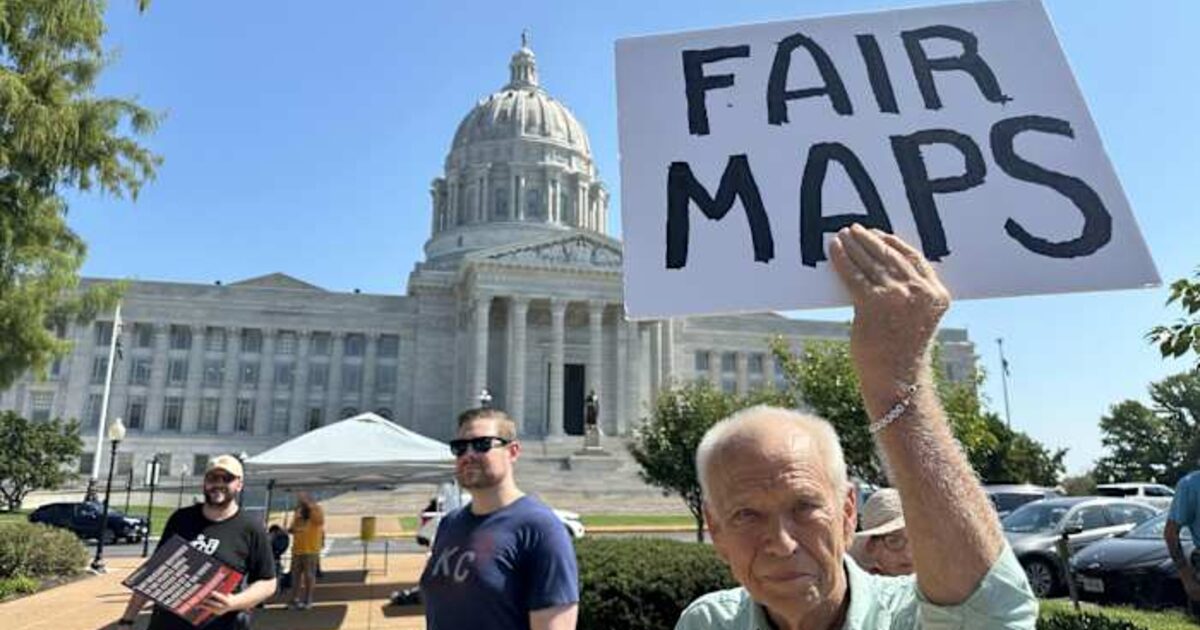
Missouri is reportedly in the middle of a tangled legal fight over which congressional district map will be used for the November election. According to news reports, two courts issued opposing orders on the same day, leaving state officials and voters uncertain about how ballots will be drawn.
The state's highest court had earlier ruled that a newly drawn map — one reportedly backed by the president and passed during a special legislative session — could not go into effect because citizens had submitted enough petition signatures to force a statewide referendum. That court concluded the new map never technically became law.
The state's attorney general asked the U.S. Supreme Court to step in. The nation's highest court declined to take up the appeal, which generally leaves the lower court's decision in place. But within the same day, a federal district judge issued a temporary restraining order pointing the other direction, reportedly requiring the state to use the new map rather than the old one, on the theory that switching maps between the primary and general election could cause voter confusion.
Opponents quickly filed notice of appeal to the federal appeals court. Meanwhile, the group that sponsored the referendum petition reportedly asked the state supreme court to hold the secretary of state in contempt for moving forward with the new districts. The situation remains unsettled as election deadlines approach.
Why It Matters Legally
This story is about elections, but the underlying legal dynamics show up all the time in business litigation and other complex civil cases: competing court orders, temporary restraining orders (TROs), disputed jurisdiction between state and federal courts, and rapid-fire appeals.
When two courts issue orders that appear to contradict each other, the parties caught in the middle face a genuine dilemma. Complying with one order may put them in violation of the other. Lawyers generally have to move quickly to seek clarification, stays, or emergency appellate review.
This case also highlights how a temporary restraining order works. A TRO is generally a short-term court order — often lasting only a couple of weeks — designed to preserve the status quo while a court decides whether a longer-lasting injunction is warranted. TROs are common in business disputes involving trade secrets, non-compete agreements, contract enforcement, and similar urgent matters.
Finally, the situation shows why appellate strategy matters. When the U.S. Supreme Court declines to hear a case, that generally leaves the lower court's ruling in place — but it does not necessarily prevent parallel litigation in a different court from reaching a different result.
Who Could Be Affected
While the Missouri story involves voters and candidates, the legal issues it raises may affect a much broader group of people and organizations, including:
- Businesses caught between conflicting court orders in different jurisdictions, such as a company sued in multiple states over the same conduct.
- Corporate officers and compliance teams who must decide how to act when directives from different authorities appear to conflict.
- Parties to injunctions or TROs, who generally must comply immediately or risk contempt findings.
- Candidates, campaigns, and civic organizations whose plans depend on decisions being finalized well before a deadline.
- Local officials who administer processes governed by higher-level rulings and may face liability if they act on the wrong order.
How Cases Like This Generally Work
In business and civil litigation, cases involving competing court orders typically move through several predictable stages:
1. The initial filing and emergency motion. A party seeking urgent relief generally files a lawsuit and asks for a TRO or preliminary injunction. Courts usually apply a multi-factor test that considers likelihood of success on the merits, irreparable harm, the balance of hardships, and the public interest.
2. The opposing party's response. The other side may file its own lawsuit in a different court — sometimes a different court system entirely (state versus federal) — seeking the opposite result. Lawyers generally look closely at which court has proper jurisdiction, whether abstention doctrines apply, and whether one court's order preempts the other.
3. Appeals and emergency stays. When a party is unhappy with a lower court ruling, it can generally seek review from an appellate court and ask for an emergency stay. In fast-moving disputes, appellate courts sometimes rule within days or hours.
4. Evidence and record-building. Even in emergency proceedings, evidence matters. Courts typically look at the text of governing laws or contracts, sworn declarations, timelines showing when key events occurred, and expert analysis where relevant.
5. Compliance and contempt risk. Parties subject to a court order generally must comply promptly. Ignoring an order — even one a party believes is wrong — can lead to contempt findings, sanctions, or worse. The usual path is to comply while seeking to overturn the order through proper channels.
Timelines vary widely. Some emergency matters wrap up in days; others linger for months or years while appeals play out.
What to Watch Next
Readers following this story or similar disputes may want to look for:
- Appellate rulings from the federal appeals court on the TRO, which reports indicate has already been the subject of a notice of appeal.
- State supreme court action on the pending contempt request, reportedly scheduled for argument later this week.
- Further U.S. Supreme Court involvement, which could occur if parties file new emergency applications framing the issue differently.
- Administrative deadlines, including federal rules governing when absentee ballots must be mailed to overseas and military voters.
- Guidance to local officials on which map to use, which may shift more than once before Election Day.