What Happened
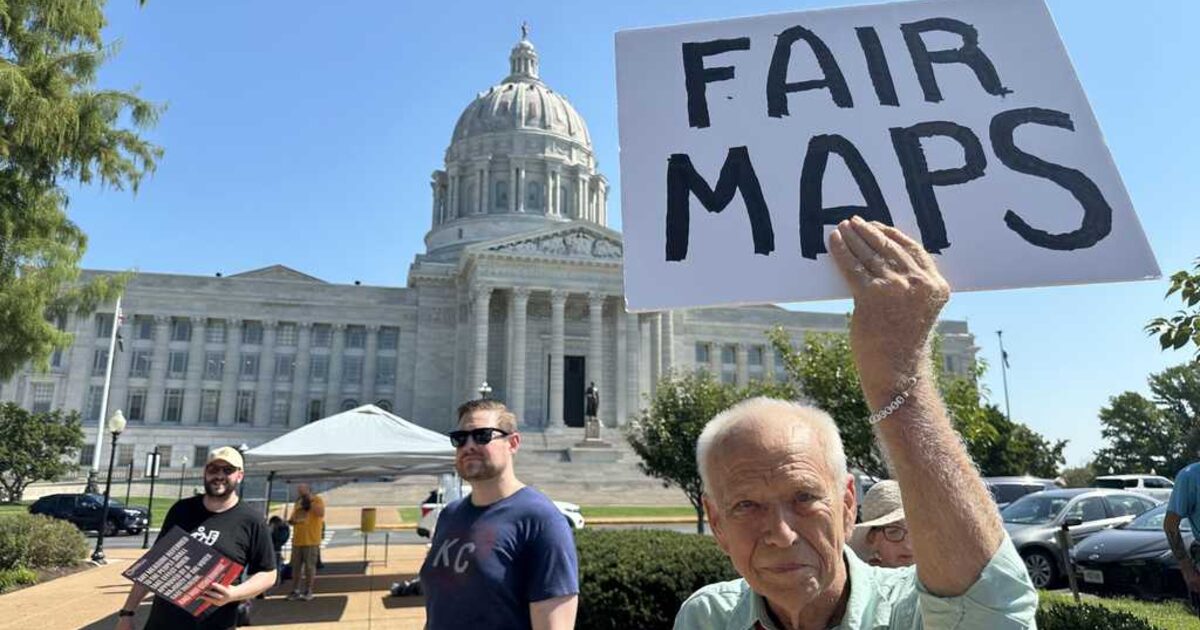
Missouri is in the middle of a confusing legal tug-of-war over which congressional map will be used in the upcoming November election. According to reports, the U.S. Supreme Court recently declined to take up an appeal from the state's attorney general, allowing an order from the Missouri Supreme Court to stand. That state-level ruling had blocked a newly drawn map — one reportedly backed by the current administration and passed during a special legislative session — after residents submitted enough petition signatures to force a public referendum on it.
Moments after the U.S. Supreme Court's decision, a federal district judge in Missouri reportedly issued a temporary restraining order pointing in a different direction. That order generally requires the state to keep using the newer districts, at least for a limited window, because those were the boundaries used in the August primary. The judge reasoned, according to the reporting, that swapping maps between the primary and general elections could create significant voter confusion.
The end result is a patchwork of overlapping court orders. State officials say they will comply with the federal order, while attorneys for the citizen group behind the referendum note that the state supreme court's ruling also remains in effect. Voters in some parts of Missouri are reportedly unsure which district they will be voting in when November arrives.
Why It Matters Legally
At first glance, a redistricting fight looks like a purely political story. But cases like this actually sit at the intersection of several important legal areas — constitutional law, election law, administrative law, and, less obviously, business and corporate law.
Here's why business lawyers pay attention. Congressional districts help determine which party controls the U.S. House, and that in turn influences federal legislation, regulatory priorities, agency budgets, and oversight of industries ranging from finance to healthcare to energy. When maps are contested, the resulting uncertainty can affect long-range planning by companies that operate across state lines.
There is also a direct legal-process angle. The Missouri dispute reportedly involves questions about whether a citizen referendum can be used to challenge a redistricting law, how state constitutional provisions interact with federal election requirements, and whether emergency injunctions from different courts can coexist. These are the kinds of procedural questions that regularly appear in complex business litigation as well — especially when parties race to different courts seeking competing orders.
Who Could Be Affected
A redistricting fight of this kind can touch a surprisingly wide range of people and organizations, generally including:
- Voters and candidates in the affected districts, who may face uncertainty about ballots, eligibility, and representation.
- Election officials and local governments, which may need to reprint materials, update systems, and manage public communication on short notice.
- Businesses with government contracts or regulated operations, which may see shifts in oversight priorities depending on which representatives take office.
- Trade associations and industry groups that lobby on federal policy, since new congressional lineups can change which committees hear which issues.
- Nonprofits and civic organizations that organize around ballot measures or referenda, which may see their procedural rights clarified or narrowed by these rulings.
How Cases Like This Generally Work
Redistricting and election-law disputes typically move on compressed timelines because election dates are fixed. That generally shapes everything about the litigation.
Where cases are filed. Challenges may start in state court, federal court, or both at the same time. State courts generally handle questions about state constitutional provisions and state-level procedures like referendums. Federal courts generally handle claims involving the U.S. Constitution, the Voting Rights Act, and federal election statutes.
What evidence matters. Courts typically look at the text of the maps, the legislative record behind them, expert analysis of demographic and voting patterns, and — in cases involving referendums — the procedural history of petition signatures and administrative decisions. When emergency orders are requested, judges also weigh practical factors like the cost of changing course and the risk of voter confusion.
What a lawyer would look at first. In a business-litigation frame, attorneys often start by mapping out the competing orders, the appellate paths available, and the deadlines that could moot the whole case. They also generally assess whether their client's interests are best served by intervening directly, filing an amicus brief, or simply monitoring the outcome.
Timelines. Temporary restraining orders are usually short — often around 14 days, according to reporting on this case — and are meant to preserve the status quo while longer proceedings play out. Full appeals may take months or years, but election-related disputes are frequently expedited.
What to Watch Next
Several things could unfold in the coming weeks and months. Readers may see:
- Follow-up hearings in the federal case, as the temporary order expires and the court considers longer-term relief.
- Ballot developments around the reported referendum, which has reportedly been assigned a proposition designation for the November ballot.
- Additional appeals to state or federal appellate courts, potentially including further requests for U.S. Supreme Court review.
- Election-administration guidance from state officials clarifying which map governs in November and how any confusion will be handled.
- Parallel disputes in other states that have reportedly redrawn maps in the same general timeframe, which could produce rulings that influence Missouri's outcome.