What Happened
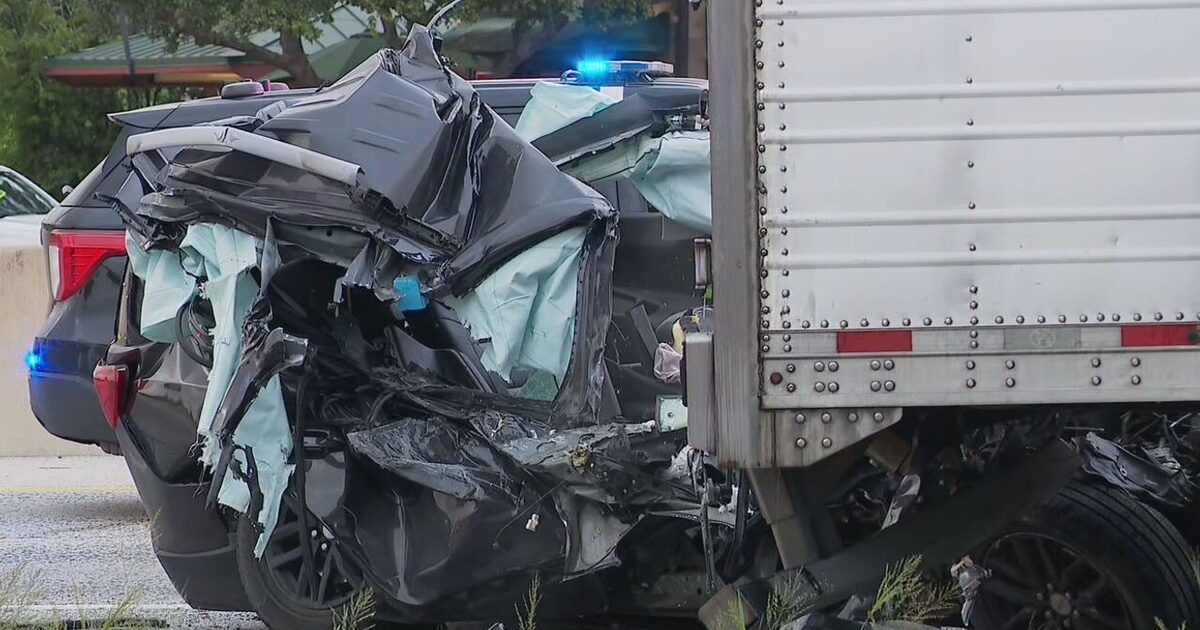
Early on a Thursday morning in early August 2026, a fatal collision reportedly shut down the southbound lanes of Interstate 35 near West Southcross Boulevard in San Antonio, Texas. According to local reporting, an SUV traveling south left the main travel lanes, drifted onto the right shoulder, and struck the rear of a parked 18-wheeler at around 6:11 a.m.
The driver of the SUV was reportedly killed at the scene. Investigators said the injuries were severe enough that responding officers could not immediately determine the driver's identity or gender. The truck driver was reportedly uninjured.
Police have said the tractor-trailer was parked fully on the shoulder rather than in a travel lane, though it was described as sitting close to the roadway. Authorities also reportedly noted that there were no visible signs the SUV driver braked before impact. The reason the semi was stopped on the shoulder was still under investigation at the time of reporting.
The rest of this article is not about this specific crash or the specific people involved. Instead, we use the news as a jumping-off point to explain, in plain English, how personal injury law generally treats collisions with parked commercial trucks.
Why It Matters Legally
Rear-end crashes with parked semi-trucks sit at the intersection of several areas of law. On one side is standard motor vehicle negligence — the idea that every driver owes a duty to pay attention, stay in their lane, and keep a safe speed. On the other side is commercial trucking regulation, which imposes extra rules on 18-wheelers, their drivers, and the companies that employ them.
Federal Motor Carrier Safety Regulations, for example, generally address when and where a commercial truck may stop, what warning devices (like triangles or flares) must be placed behind a disabled vehicle, and how long a driver may remain behind the wheel. State laws typically add rules about shoulder parking, hazard lighting, and lane markings.
When a passenger vehicle strikes a stationary truck, investigators usually try to answer two connected questions: Why did the smaller vehicle leave its lane? And did the truck have a legal right to be where it was? The answers shape whether a case looks like driver error, shared fault, or something closer to a trucking industry claim.
Who Could Be Affected
Stories like this touch a wide range of people, even beyond the immediate parties. In general terms, the following groups may have legal questions after a similar incident:
- Surviving family members of a driver killed in a crash, who may want to understand wrongful death and survival claims.
- Passengers injured in a vehicle that strikes a parked truck, since their claim is often separate from the driver's.
- Truck drivers and their employers, who may face scrutiny about hours-of-service compliance, mechanical issues, or shoulder-parking decisions.
- Other motorists who were forced to swerve, brake hard, or were struck by secondary debris.
- First responders injured while working the scene, who may have workers' compensation and, in some cases, third-party claims.
How Cases Like This Generally Work
In the general run of cases, an attorney evaluating a crash with a parked 18-wheeler will usually focus first on a few key evidence sources.
Scene evidence. Police reports, photographs, skid marks (or the lack of them), and the resting positions of the vehicles help reconstruct what happened. If, for instance, there is no sign of braking, investigators may look into fatigue, medical events, distraction, or impairment on the part of the passenger-vehicle driver.
Truck-side data. Modern commercial trucks generally carry electronic logging devices (ELDs), engine control modules, and sometimes forward- and rear-facing cameras. These can show how long the truck had been stopped, whether hazard lights were on, and whether the driver was on a required rest break.
Regulatory compliance. Lawyers typically look at whether the truck's shoulder stop was allowed under federal and state rules, whether reflective triangles were deployed if required, and whether the trucking company's dispatch practices pushed the driver into an unsafe situation.
Comparative fault. Many states, including Texas, use some form of comparative negligence. That generally means a jury can assign a percentage of fault to each party. In Texas, a claimant who is more than 50% at fault typically cannot recover damages, while other states like California follow a "pure" comparative model that allows some recovery even at high fault percentages.
Timelines. Statutes of limitations vary widely. In Texas, wrongful death and personal injury cases generally must be filed within two years of the incident, though exceptions exist. In New York and Maryland, the deadlines are typically three years for personal injury, with different rules for wrongful death. Missing these windows can end a case before it starts.
A claim, if one is pursued, might target the truck driver, the motor carrier that employed them, a maintenance contractor, or, in rare situations, a parts manufacturer. Insurance coverage on commercial trucks is generally much larger than on a passenger vehicle, which is one reason these cases are handled differently from ordinary fender-benders.
What to Watch Next
In follow-up reporting on incidents like this one, readers can typically expect a few developments:
- Identification of the deceased driver once the medical examiner completes its work and family is notified.
- A final police report, which may include a determination of contributing factors such as fatigue, impairment, or medical emergency.
- Any citations or charges against either driver, though it is common for no charges to be filed when the at-fault driver did not survive.
- Regulatory review by state or federal authorities into the trucking company, especially if questions remain about why the semi was on the shoulder.
- Civil filings, which sometimes appear months later if the family of the deceased driver, or the trucking company, decides to pursue claims.