What Happened
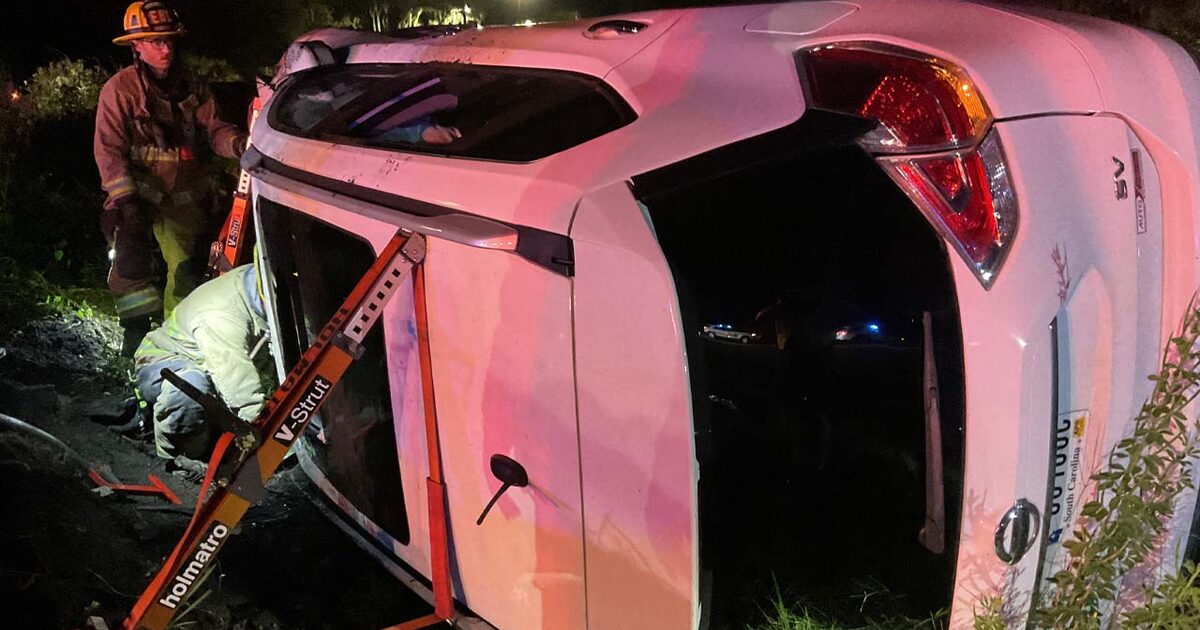
Early on a Saturday morning in Burton, South Carolina, first responders reportedly rescued a driver whose vehicle had rolled onto its side during a single-car wreck. According to local reporting citing the Burton Fire District, the crash happened on Broad River Boulevard near Sundown Bend at roughly 3 a.m.
When firefighters arrived, they reportedly found one passenger vehicle on its side with the driver trapped inside. Crews stabilized the car so that Beaufort County EMS could reach the driver and check for injuries. Firefighters then removed the windshield to safely pull the driver out. The driver was taken to a nearby hospital, and initial reports suggest the injuries were not life-threatening.
Officials also noted that the Burton Fire District has reportedly responded to more than 125 vehicle collisions so far in 2026, with rescuers needing to extricate trapped occupants in five of them. No cause has been publicly identified, and no allegations of wrongdoing have been reported.
Why It Matters Legally
Single-vehicle crashes are often assumed to be simple — one driver, no one else involved, case closed. In reality, they can raise several overlapping legal questions. Personal injury law, motor vehicle law, and sometimes product liability law can all come into play, even when only one car is on scene.
A solo rollover, for example, can be caused by many things that have nothing to do with the driver's choices: a defective tire, a suspension failure, an unmarked pothole, standing water, poor road design, a wandering animal, or the sudden actions of another motorist who left the scene. Any one of those possibilities could open the door to a claim against a party other than the injured driver.
Insurance law also matters. In South Carolina, drivers generally carry liability coverage, and many also carry underinsured or uninsured motorist coverage that can respond to certain single-vehicle events. Medical payments coverage and collision coverage may also come into play. Understanding what policies exist — and what they cover — is often one of the first things a lawyer would review.
Who Could Be Affected
Cases like this can touch several groups of people, including:
- Drivers involved in solo wrecks. They may assume they have no claim, when in fact a third party or product defect could be partly to blame.
- Passengers in single-vehicle crashes. A passenger who is injured generally has a potential claim against the driver's insurance regardless of who was at fault.
- Family members of injured or deceased occupants. Loved ones may have derivative claims, especially if injuries turn out to be more serious than first reported.
- Motorcyclists, cyclists, or pedestrians hurt in similar road conditions along the same stretch of road.
- Local residents who use roads where hazards, drainage issues, or signage problems may have contributed to repeated crashes.
How Cases Like This Generally Work
While every case is different, personal injury matters arising from a single-vehicle crash tend to follow a similar arc.
1. Emergency response and medical care. The first priority is always treatment. Medical records from the scene, the ambulance ride, and the hospital become key pieces of evidence later. Injuries that seem "non-life-threatening" at first can sometimes develop into more serious problems, such as concussions, spinal injuries, or internal bleeding that surfaces days later.
2. Investigation of cause. Law enforcement typically produces a crash report, but that report is only a starting point. Lawyers generally look at skid marks, vehicle damage patterns, road surface conditions, weather, lighting, nearby traffic cameras, and any dashcam or doorbell footage in the area. In rollover cases specifically, the vehicle itself is critical — tire condition, roof integrity, seat belt performance, and airbag deployment can all be examined by engineers.
3. Identifying responsible parties. Even when only one car is involved, more than one party can potentially bear responsibility. Possibilities may include a vehicle manufacturer, a tire maker, a repair shop that recently worked on the car, a government agency responsible for road maintenance, or another driver who caused the crash but did not stop.
4. Insurance claims. Before any lawsuit, most cases move through the insurance process. Adjusters investigate, request records, and often make early settlement offers. Those first offers are generally lower than what a claim may ultimately be worth, especially before the full extent of injuries is known.
5. Filing suit and deadlines. If a claim cannot be resolved with insurance, a lawsuit may follow. South Carolina generally applies a three-year statute of limitations for personal injury cases, and Texas generally applies a two-year deadline. When a government entity is potentially involved — for instance, in a road-maintenance claim — much shorter notice deadlines can apply, sometimes just months from the date of the incident.
6. Resolution. Most personal injury cases resolve through settlement rather than trial. The size and shape of any resolution generally depends on the severity of injuries, the strength of the evidence, and the available insurance coverage.
What to Watch Next
For a single-vehicle rescue like the one reported in Burton, follow-up coverage may address several things:
- Whether the responding agency releases a cause or contributing factors.
- Whether a traffic citation is issued to anyone.
- Any update on the driver's condition, especially if injuries turn out to be more serious than initially reported.
- Whether the roadway itself becomes a topic of discussion, given the fire district's reported total of more than 125 collisions in the area this year.
- Any civil filings that may appear on the local court docket in the coming months.
Frequently Asked Questions
Can I sue anyone if I was the only driver in a crash?
Possibly. Even in a solo wreck, another party may share responsibility — for example, a tire manufacturer, a road maintenance agency, or an unidentified driver who caused you to swerve. A lawyer would generally review the facts to see whether any third-party claim is realistic.
What if the other driver caused the crash but drove away?
Hit-and-run and "phantom vehicle" situations may be covered by uninsured motorist coverage on your own auto policy. Coverage rules vary, but this is one reason lawyers often ask about your own insurance even when someone else appears to be at fault.
How long do I have to file a personal injury claim in South Carolina?
South Carolina generally applies a three-year statute of limitations for most personal injury lawsuits. However, claims involving government entities can carry much shorter notice deadlines, so it is generally wise to ask a lawyer about timing early.
My injuries seemed minor at first. Should I still document everything?
Generally, yes. Symptoms like headaches, dizziness, or back pain can worsen over days or weeks. Keeping medical records, photos of the vehicle, and notes about how you feel each day can be very helpful if a claim is filed later.
Does insurance always pay for a rollover crash?
Not always. Coverage depends on the policy, the cause of the crash, and who is deemed responsible. Collision coverage generally applies to vehicle damage regardless of fault, while liability, medical payments, and uninsured motorist coverages each work differently.
What evidence matters most in a rollover case?
The vehicle itself is often central — especially tires, seat belts, the roof structure, and any electronic data recorders. Photos of the scene, weather and road conditions, witness statements, and nearby video footage generally matter as well.
Should I talk to the insurance company before speaking with a lawyer?
You are generally not required to give a recorded statement to another driver's insurance company. Many people choose to speak with a lawyer first so they understand their rights and are not pressured into an early settlement that undervalues their injuries.