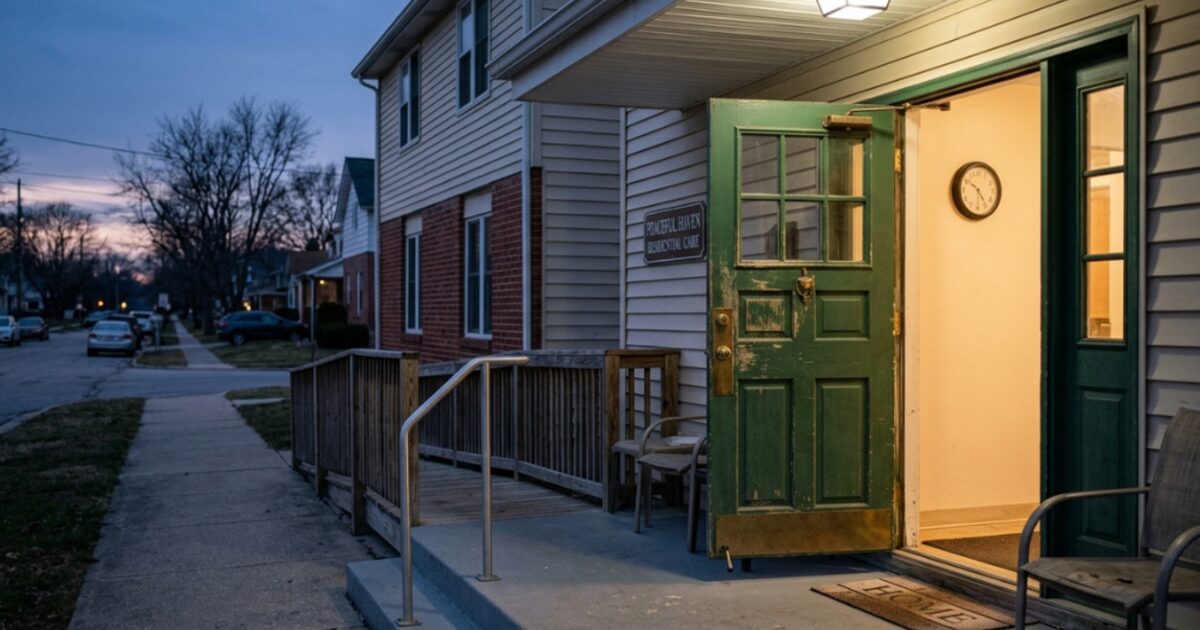
A tragic incident at a small Michigan care home has turned into a high-stakes fight — not just about what happened to a resident, but about who has to pay if the facility is found responsible. The insurer that sold the home's business liability policy is now asking a federal judge to declare that it owes nothing at all.
This kind of coverage dispute rarely makes headlines, but it matters. It shows how the fine print in a commercial insurance policy can decide whether a business survives a lawsuit or gets crushed by it.
What Happened
According to court filings reported in the trade press, a resident of an adult foster care facility in Michigan allegedly walked out of the home in mid-January 2026 and was struck by a vehicle. He reportedly died from his injuries. He had only recently become a resident, having moved in about a week before the incident.
In March 2026, the estate's personal representative reportedly filed a wrongful death lawsuit in a Michigan state court. The suit allegedly claims the facility failed to properly supervise and monitor the resident, who reportedly had dementia or cognitive impairment and was known to wander. The suit is said to include claims for negligence and breach of contract.
On August 24, 2026, the facility's commercial general liability insurer, Hiscox, reportedly filed a separate action in the U.S. District Court for the Eastern District of Michigan. The carrier is asking the federal court for a declaratory judgment — essentially, a ruling in advance — that two exclusions in the policy cut off any duty to defend the facility or pay damages if the family wins.
According to reports, the insurer is currently paying for the defense under a "reservation of rights," meaning it is footing the legal bills for now but preserving its argument that it does not actually owe coverage.
None of the allegations have been tested in court. No judge has ruled on whether the exclusions apply.
Why It Matters Legally
This is a classic insurance coverage dispute, and it sits at the intersection of several areas of business and corporate law: commercial insurance, contract interpretation, and negligence law affecting licensed care providers.
Commercial general liability (CGL) policies are the standard business liability coverage many small companies rely on. They generally promise to defend the business against covered lawsuits and pay judgments or settlements within policy limits. But every CGL policy has exclusions — categories of claims the carrier says it will not cover.
Here, the carrier reportedly points to two exclusions:
- A professional services exclusion, which generally removes coverage for harm caused by the delivery (or failure to deliver) a professional service. Insurers often argue that licensed care, medical judgment, and supervision of vulnerable people qualify as "professional services" and belong under a separate professional liability policy.
- A contractual liability exclusion, which generally removes coverage for obligations the insured took on by signing a contract, with some carve-outs. The carrier reportedly points to a Resident Agreement that promised specific supervision and safety measures.
Who Could Be Affected
Cases like this reach further than the parties in the courtroom. Groups who may want to pay attention include:
- Families of residents in adult foster care, assisted living, or memory care. Coverage disputes can affect whether a wrongful death or injury claim ends in a meaningful recovery or an empty judgment.
- Small care facility owners and operators. A ruling favoring the insurer could push many small operators to reassess whether they need professional liability coverage in addition to a CGL policy.
- Any small business that signs service contracts. Contractual liability exclusions can bite in unexpected ways when a company promises specific outcomes or protections in writing.
- Insurance brokers and risk managers. Court rulings on exclusion wording generally shape how policies are marketed and how gaps are explained to buyers.
How Cases Like This Generally Work
Coverage disputes typically follow a recognizable path:
- Someone gets sued. An underlying lawsuit — here, the wrongful death case — is filed against the insured business.
- The insured tenders the claim. The business notifies its insurer and asks for a defense and coverage.
- The insurer responds under a reservation of rights. The carrier may agree to pay defense costs while reserving the right to later argue it owes nothing. That is reportedly what is happening here.
- A declaratory judgment action is filed. Either the insurer or the insured asks a court to rule on coverage. Insurers often file first in federal court when there is diversity of citizenship.
- The court interprets the policy. Judges generally look at the policy language, the specific allegations in the underlying complaint, and applicable state law on how ambiguities are read. In many states, ambiguities in insurance contracts are generally construed against the insurer, who drafted them.
- Discovery and motion practice. The parties exchange documents and often file motions for summary judgment asking the court to decide the coverage question as a matter of law.
What to Watch Next
Readers following this story in the coming months might see:
- The defendants' answer in the coverage case, likely arguing that the exclusions do not apply or are ambiguous.
- Cross-motions for summary judgment on whether the carrier owes a defense, indemnity, or both.
- Movement in the underlying state court case, including any motions to dismiss or early discovery about staffing and supervision practices.
- State licensing or regulatory review of the facility, since adult foster care homes are typically regulated at the state level.
- Possible settlement talks once the coverage question is clearer. Insurance certainty often drives settlement in negligence cases.