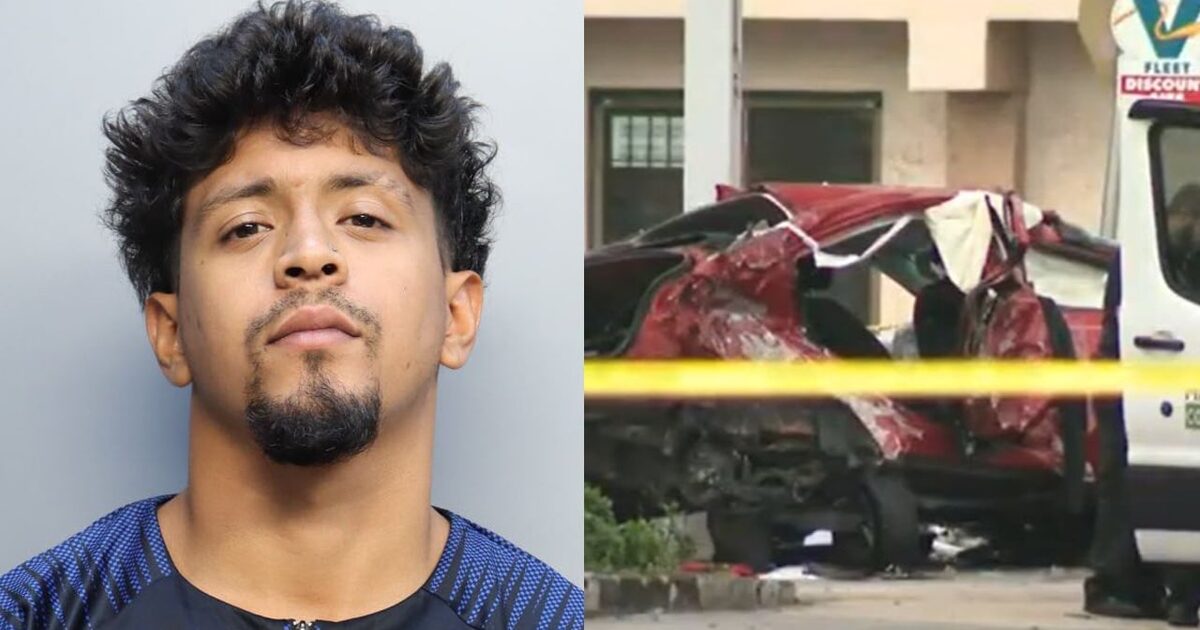
A recent South Florida news story highlights an unusual — and legally messy — situation: a man accused of causing a deadly 2022 crash was reportedly deported to Honduras before his criminal case wrapped up, then brought back to Miami-Dade County to face charges. It's the kind of case that shows how easily the criminal justice system and the immigration system can get out of step with each other, and what that can mean for defendants, victims' families, and the public.
Below is a plain-English look at the legal issues raised by the reporting, written for readers who want context rather than legal advice.
What Happened
According to local reporting, a man in his late twenties at the time was accused of a fatal crash in Miami in February 2022 that reportedly killed three people. He was arrested weeks later and charged with several serious offenses, including DUI manslaughter, vehicular homicide, and DUI causing serious bodily injury.
While the criminal case was still pending, the man was reportedly deported to Honduras in September 2024 after a federal immigration judge signed a final removal order. Nearly two years later, he was returned to Miami-Dade County through extradition and booked into a local jail in late July 2026. Reports indicate he is again being held on an immigration detainer, but this time removal is not expected to happen until after the criminal case — and any sentence — is finished, assuming a conviction.
Why It Matters Legally
This story sits at the intersection of at least three areas of law: criminal defense, immigration, and international extradition. Each of those systems has its own rules, deadlines, and decision-makers, and they don't always communicate cleanly.
On the criminal side, DUI manslaughter and vehicular homicide are among the most serious non-intentional homicide charges in Florida law. They generally require prosecutors to prove not only that someone was driving impaired or recklessly, but that the driving caused a death. Convictions typically carry substantial prison time.
On the immigration side, a person who is not a U.S. citizen and who is charged with certain crimes can face removal proceedings running in parallel with the criminal case. Ordinarily, an "immigration detainer" is used to keep a person in custody so the criminal case can be resolved before deportation. When that coordination breaks down, a defendant can end up out of the country before a jury ever hears the case — which is essentially what the reporting describes here.
Lawyers pay attention to cases like this because they raise hard questions: How did a person facing pending felony charges leave the country under a federal order? Who is responsible for the coordination failure? And what rights do victims' families have when the accused is suddenly beyond U.S. reach?
Who Could Be Affected
Cases like this can touch several groups of people, even if they are not directly involved:
- Families of crash victims. Relatives of people killed or seriously injured in impaired-driving crashes generally have an interest in seeing the criminal case go forward. They may also have separate civil claims, such as wrongful death lawsuits, which run on different timelines than the criminal prosecution.
- Other drivers and passengers. People hurt in a crash caused by an allegedly impaired driver may be able to pursue civil compensation regardless of what happens in the criminal case.
- Non-citizen defendants. Anyone who is not a U.S. citizen and is arrested for a serious offense can face overlapping immigration consequences. The outcome of the criminal case can dramatically affect immigration status.
- Employers and insurers. Businesses whose vehicles or employees are involved in a serious crash may face civil exposure. Auto insurers are usually pulled into these cases early.
- The general public. When a defendant in a serious pending case is removed from the country by mistake, it can prompt policy reviews at the local, state, and federal level.
How Cases Like This Generally Work
Every case is different, but a serious DUI-related fatality prosecution generally follows a recognizable path.
First, the investigation. Police and prosecutors typically look at physical evidence from the scene — skid marks, vehicle damage, surveillance video from nearby businesses — along with blood-alcohol testing, witness statements, and reconstruction reports. In a fatal crash case, it can take weeks or months of investigation before formal charges are filed.
Second, charging decisions. Prosecutors usually stack charges to cover different theories: DUI manslaughter (impairment caused the death), vehicular homicide (reckless driving caused the death), and lesser included offenses. A defense lawyer will generally look closely at how the blood draw was obtained, whether the traffic stop or arrest was lawful, and whether the crash reconstruction actually supports causation.
Third, pretrial motions and negotiations. Defense teams may challenge evidence, request independent testing, and negotiate with prosecutors. In cases involving non-citizens, immigration consequences are usually a major factor in any plea discussion.
Fourth, trial or plea. If a case goes to trial, the government generally must prove each element beyond a reasonable doubt. If there is a conviction, sentencing typically takes into account victim impact, prior record, and any mitigating factors.
Timelines in serious felony cases often stretch over one to three years, and delays are common when a defendant is out of state — or, as in this reporting, out of the country. Extraditing someone from abroad generally requires cooperation between the U.S. State Department and the foreign government under a treaty, and can add many months to a case.
What to Watch Next
Readers following this or similar stories may see several developments in follow-up reporting:
- Court filings setting bond conditions, arraignment dates, and trial scheduling.
- Motions to suppress evidence such as blood-alcohol results or statements to police.
- Agency reviews into how a defendant with pending felony charges was deported. Federal immigration authorities and local prosecutors sometimes publish statements when this kind of coordination failure comes to light.
- Civil lawsuits filed by the families of people killed or injured, which typically move on a separate track from the criminal case.
- Any plea agreement or trial verdict, plus sentencing if a conviction happens. Immigration removal generally would follow the completion of any sentence.