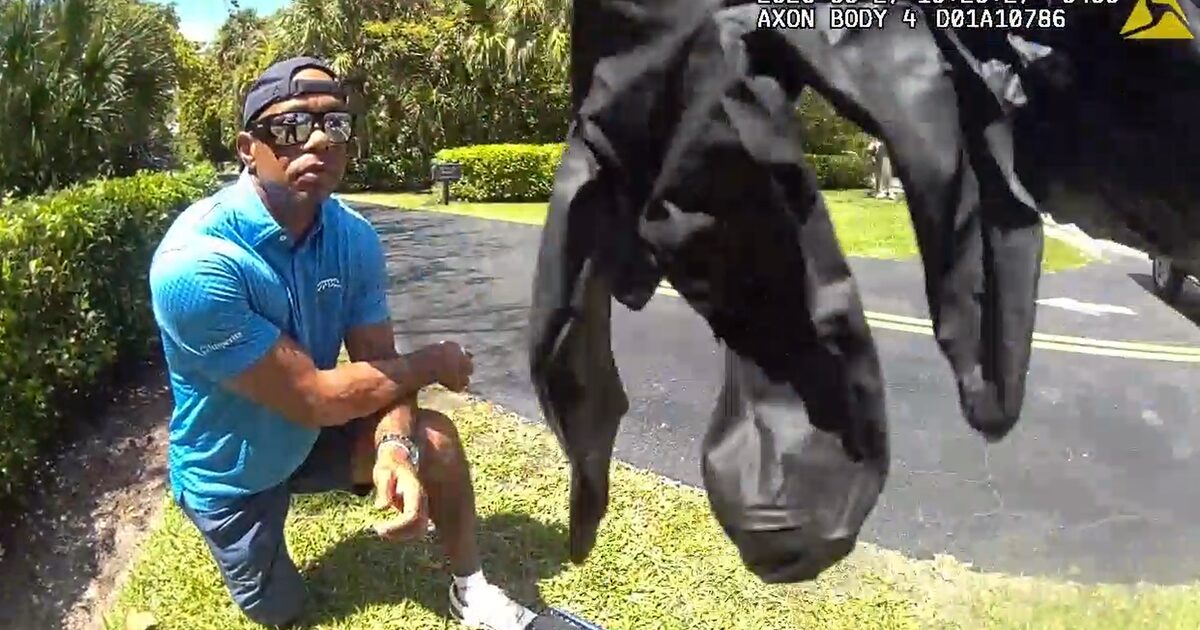
A Florida DUI case involving a globally recognized athlete has been in the news since a single-vehicle rollover crash earlier this year, and it now appears to be moving toward a negotiated resolution rather than a trial. According to local reporting out of Martin County, a plea conference has been placed on the court's calendar, which is often a strong signal that both sides are close to an agreement.
We're not covering the celebrity angle here. Instead, we're using the news as a window into something far more common: how ordinary misdemeanor DUI cases generally work in the United States, what a plea deal actually is, and what people in similar situations may want to understand before their own court date.
What Happened
According to reports, a well-known public figure was involved in a rollover crash on Jupiter Island, Florida in March. Investigators reportedly believed the driver was impaired and arrested him on a DUI charge. A second misdemeanor charge was later added after he allegedly refused to submit to a urine test that would have screened for drugs.
Both charges are reportedly classified as misdemeanors under Florida law. A former state prosecutor quoted in local coverage suggested that a plea agreement would likely serve both the defense and the prosecution, in part because incarceration would be unlikely even after a full trial, and a trial would attract significant media attention. A plea conference has reportedly been scheduled at the Martin County Courthouse, and it is unclear whether the defendant will appear in person.
Nothing in this story has been proven at trial. As of publication, the matter has not resulted in a conviction, and the terms of any potential agreement have not been publicly confirmed.
Why It Matters Legally
DUI (driving under the influence) is one of the most frequently charged offenses in the country, and the vast majority of these cases are misdemeanors — meaning the maximum jail exposure is generally less than a year, and the case is handled in a lower-level trial court rather than as a felony.
A few legal threads run through cases like this one:
- Impaired-driving statutes. Every state criminalizes operating a vehicle while under the influence of alcohol, drugs, or both. Definitions and penalties vary widely.
- Implied consent laws. In most states, drivers are considered to have agreed, by using public roads, to submit to a chemical test if lawfully arrested for suspected impairment. Refusing that test can carry its own penalty, separate from the DUI itself.
- Plea bargaining. Courts everywhere rely heavily on negotiated resolutions. A plea deal is essentially a contract: the defendant gives up the right to trial in exchange for some benefit, such as a reduced charge, dismissed counts, or an agreed sentence.
Who Could Be Affected
While this particular case involves a celebrity, the legal issues touch a very broad group of people. Anyone in the following situations may face similar questions:
- Drivers arrested after a single-vehicle crash, where investigators suspect impairment.
- Motorists who declined a breath, blood, or urine test during a traffic stop or after a crash.
- People facing a first-time misdemeanor DUI, who may be weighing whether to fight the case or negotiate.
- Drivers who were reportedly under the influence of prescription medication rather than alcohol — an increasingly common fact pattern.
- Family members of someone charged with DUI, who want to understand what the court process looks like.
How Cases Like This Generally Work
A typical misdemeanor DUI case in the U.S. tends to follow a recognizable path, though details vary by state and county.
1. The stop or crash investigation. Officers document their observations — driving pattern, odor, speech, coordination, field sobriety tests, and any admissions. In crash cases, physical evidence and witness statements often play a larger role than a traditional traffic stop.
2. Chemical testing (or refusal). Officers generally request a breath, blood, or urine sample. A refusal typically triggers administrative penalties, such as an automatic license suspension, and in some states can be charged as a separate offense.
3. Formal charges and arraignment. Prosecutors review the arrest report and file formal charges. The defendant enters an initial plea, usually not guilty, and the case moves into pretrial.
4. Discovery and motions. Defense counsel generally reviews body-camera footage, dashcam video, crash reconstruction reports, and lab results. Lawyers may file motions to suppress evidence — for example, arguing that a stop was unlawful or that testing procedures were not followed.
5. Plea negotiations. This is where most cases resolve. A prosecutor may offer to reduce a DUI to a lesser offense (such as reckless driving, sometimes called a "wet reckless") in exchange for a guilty or no-contest plea. Common terms may include probation, fines, community service, alcohol education, ignition interlock, and license conditions.
6. Plea conference and sentencing. At a plea hearing, the judge generally confirms that the defendant understands the rights being waived, accepts the plea, and imposes the agreed sentence. Defendants are usually required to be present, although courts have occasionally allowed exceptions.
7. If no deal is reached — trial. A bench or jury trial follows. For a misdemeanor, this is comparatively rare, particularly for first-time offenders where incarceration is unlikely.
Timelines vary. A simple misdemeanor DUI may resolve in a few months; a contested case with lab issues or motion practice can stretch a year or more.
What to Watch Next
Follow-up coverage of a case like this often reports on a handful of concrete developments:
- Whether a plea is entered, and if so, to which charge.
- The sentence, including any probation term, fines, license impact, or required programs.
- Any administrative action by the state's motor vehicle agency, separate from the criminal court.
- Civil filings, if property damage or injuries from a related crash lead to insurance claims or lawsuits.
- Public statements from either side, though defense counsel often say little beyond the court record.