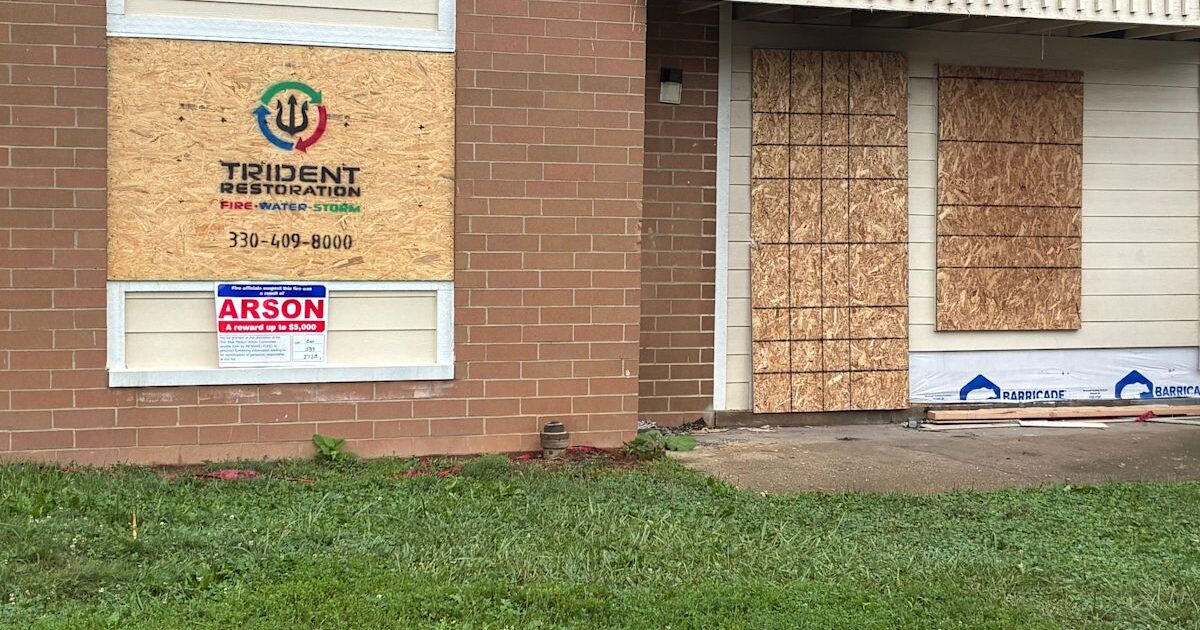
A recent arrest in Ohio is drawing attention to how the legal system handles cases where a suspected homicide and a suspected arson happen at the same scene. According to reports, a man wanted in connection with the deaths of two women found inside a burning Canton apartment was taken into custody near New Philadelphia. Two other people have reportedly been charged with related offenses, and a third suspect is said to still be at large.
Because cases like this touch on some of the most serious charges in state criminal law, they raise questions many readers may have: What does "aggravated" mean? Why are some people charged with murder and others only with helping cover it up? And how do prosecutors sort it all out? Here is a plain-English look.
What Happened
According to reporting from local outlets and a statement from the U.S. Marshals Service, firefighters responding to a structure fire at a Canton, Ohio apartment complex on August 9 reportedly discovered two women dead inside. Investigators say both women had suffered severe burns and gunshot wounds.
Canton police reportedly identified a suspect and obtained an arrest warrant for aggravated murder and aggravated arson. That suspect was taken into custody on August 12 in a rural area southeast of New Philadelphia by a multi-agency fugitive task force. Officials say he briefly tried to flee on foot before being arrested.
Two other individuals have reportedly been charged in connection with the incident with aggravated arson, obstructing justice, and tampering with evidence. One of them surrendered to police, while the other was still being sought at the time of the reporting. All charges are allegations at this stage, and no one has been convicted.
Why It Matters Legally
This case sits at an intersection of several serious criminal-law concepts that lawyers and courts see regularly, even if the public rarely does.
First, when a person is killed during another felony — like arson — states generally allow prosecutors to charge the homicide at an elevated level. In Ohio, that is often called aggravated murder, and it can carry the harshest penalties the state allows, potentially including life without parole. Similar concepts exist in other states under names like "first-degree murder" or "felony murder."
Second, aggravated arson is generally more serious than ordinary arson because it typically involves a risk of harm to people, not just property. If someone is inside a building when it is set on fire, the arson charge can escalate quickly.
Third, obstruction of justice and tampering with evidence are charges that apply to people who did not necessarily commit the underlying violent act but who allegedly helped afterward — for example, by hiding, destroying, or altering physical evidence, or by misleading investigators. These charges show that criminal liability can extend beyond the person who allegedly pulled a trigger or lit a fire.
Who Could Be Affected
While this specific incident involves a small group of individuals, the legal issues it raises could affect many kinds of people in similar situations:
- Families of victims in cases involving suspected homicide and arson may have both a criminal-case interest (as victims under state victims' rights laws) and potential civil claims, such as wrongful-death actions.
- Tenants and neighbors in a building where a suspicious fire occurs can be caught up in evacuations, investigations, and property loss, and may have their own civil claims against responsible parties.
- Anyone arrested on a serious warrant — including people accused of running from officers during arrest — could face additional charges such as resisting arrest or obstructing official business.
- People who are questioned as witnesses after a violent incident should generally understand that giving false information or destroying items police are looking for can, by itself, become a criminal offense.
- Co-defendants and acquaintances of a suspect may find themselves under investigation for aiding, abetting, or acting as an accessory after the fact, even without being present when the alleged crime occurred.
How Cases Like This Generally Work
Cases that combine homicide and arson allegations are typically among the most complex a prosecutor's office handles. Here is how they generally take shape.
Scene investigation. Fire investigators and homicide detectives usually work in parallel. Fire experts look for the origin and cause of the blaze — for example, whether an accelerant was used — while homicide detectives document injuries, recover ballistic evidence, and identify victims. Because fire can destroy physical evidence, forensic reconstruction may rely heavily on burn patterns, autopsy findings, and any surviving digital evidence like phones or surveillance video.
Charging decisions. Prosecutors generally review the evidence and decide which charges to file. In serious felony cases, they may present the matter to a grand jury for an indictment. Charges can be added or amended as the investigation continues.
Initial court appearances. After arrest, a defendant is typically brought before a judge fairly quickly for an arraignment, where charges are read and bail is set. In aggravated murder cases, bail is often very high or denied.
Defense investigation. Defense counsel generally look at whether the client was correctly identified, whether any statements were properly obtained, whether searches were legal, and whether forensic conclusions are actually supported by the physical evidence. In multi-defendant cases, they also look closely at what co-defendants may say and whether any of them are cooperating with the state.
Timelines. Ohio and most states have speedy-trial rules, but complex homicide cases often take a year or more to reach trial because of the volume of forensic evidence and pretrial motions. Plea negotiations may happen at any point.
Burden of proof. Throughout the process, the accused is presumed innocent. The state must generally prove every element of every charge beyond a reasonable doubt. A grand jury indictment or an arrest is not evidence of guilt.
What to Watch Next
Readers following coverage of this or similar cases can generally expect to see a few things unfold in the coming weeks and months:
- Formal indictments listing the specific charges and any additional counts, such as firearm specifications or kidnapping counts if the facts support them.
- Bail rulings and any appeals of those rulings.
- The status of any remaining outstanding suspects, including possible additional arrests.
- Preliminary hearings and motion practice, where defense attorneys may challenge the state's evidence or seek to suppress statements.
- Autopsy and fire-marshal reports becoming public through court filings, which can reshape what the public knows about the alleged sequence of events.
- Possible civil filings by the families of the deceased, which are separate from any criminal case.